Attempts at headshapes during the Principles of Animation Class.
Needs lots of progress and understanding on schematics and construction of ideas and its delivery.
A female character sketch, currently for no purpose, experimenting with poses for future references.
Tuesday, 24 February 2015
Monday, 23 February 2015
The Opening Scene
What is a scene?
The introduction of the series in an action sequence foreshadows the type of mood a majority of the series will be in, which is action and adventure setting. A main interest viewers would have on this series is the visual effects as different characters have different powers which means a variety of visual effects that can be used. Another method they use to pull viewers in is the plotholes as the audience have no prior clue to how or when or why the conflict had begun. This means that if the viewer were to watch to the end, they may or may not have their questions answered that fill the questions of the opening scene while still correlating to the present problems.
A scene is defined as "the place where an incident in real life or fiction occurs or occurred." This definition is expanded by screenwriting.io "A scene is a unit of story that takes place at a specific location and time. If one of these changes, you have a new scene"
--------------------------
The opening scene of the first episode straight out begins with the conflict of the X-Men against Jean Grey aka the Phoenix. This brings the audience right in the middle of the action introducing primary characters as well as a subplot that surrounds what seem to be the antagonist of the series, the Hellfire Club.The introduction of the series in an action sequence foreshadows the type of mood a majority of the series will be in, which is action and adventure setting. A main interest viewers would have on this series is the visual effects as different characters have different powers which means a variety of visual effects that can be used. Another method they use to pull viewers in is the plotholes as the audience have no prior clue to how or when or why the conflict had begun. This means that if the viewer were to watch to the end, they may or may not have their questions answered that fill the questions of the opening scene while still correlating to the present problems.
Act 1 Animated film review
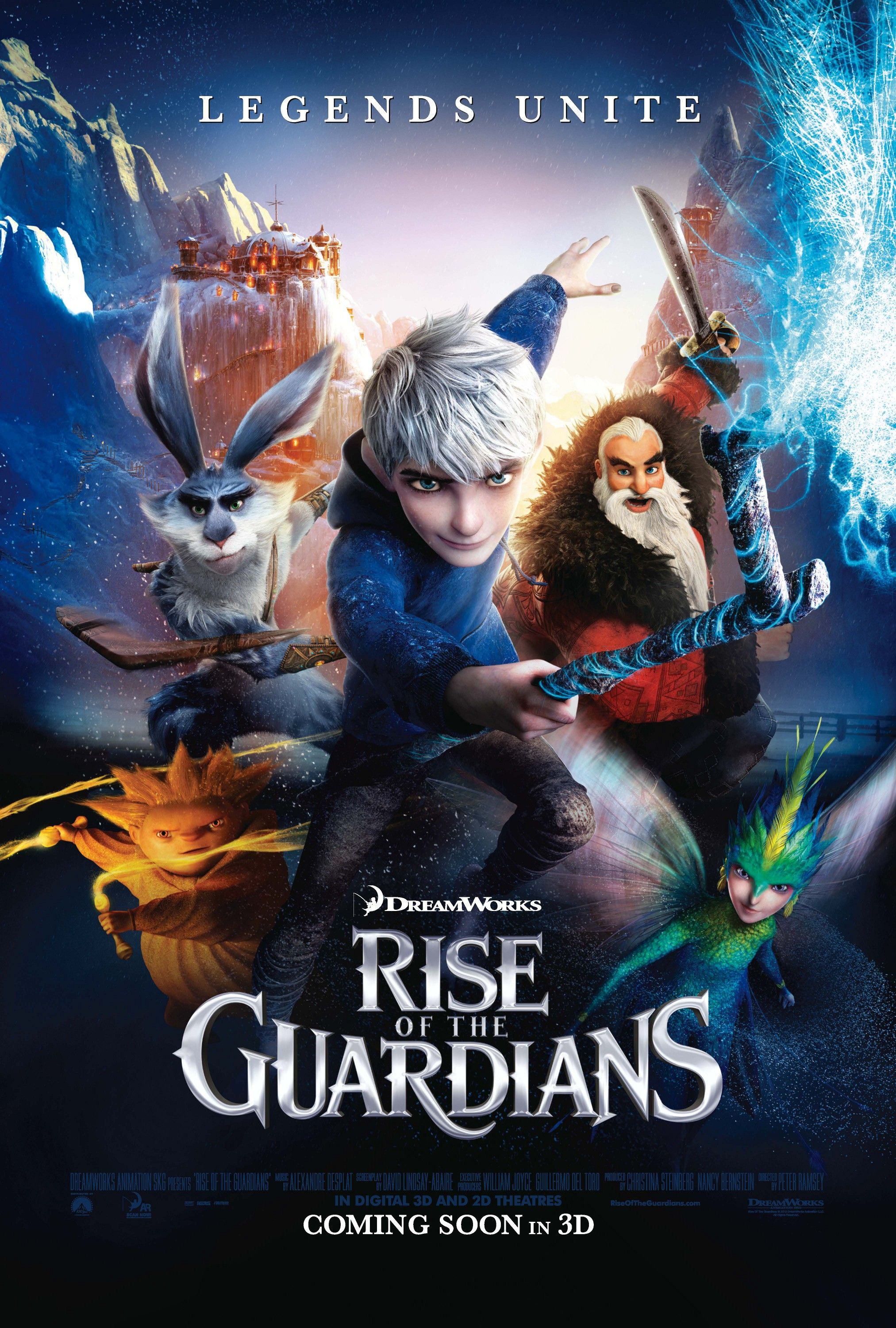
Rise of the Guardians
The opening of the film begins with a narration from a major protagonist; Jack Frost. He's narrating his first moments of "sentience/consciousness", along with it he details about finding out he has magical abilities of freezing objects and self-propelled flight.
After his little escapade, Jack Frost flies to a nearby village guesstimating around the 1700's based on the villager's clothing and buildings. Here the inciting incident occurs when a boy passes through Frost and he realizes that not only is he intangible but he is also invisible to the locals. As he is narrating his beginnings, we get an insight into a majority of his motivations which is knowledge, to be specifically knowledge of his past as the only thing he remembers is nothing....(his name was told by the moon)
The scene fades to black and the title sequence appears citing the film title 'Rise of the Guardians'. Once the title sequence disappears, a time-skip occurs, forwarding the time period by 300 years (as stated as a subtitle). The antagonist, Pitch Black aka the Bogeyman, is introduced but not really shown in a physical form, instead is relegated to silhouettes and quick dashes of darkness. The introduction of Pitch acts as the turning point/plot point as it acts as the disruption of order and sets the other protagonists into action (Santa Claus, Tooth Fairy, Easter Rabbit and Sandman) by inducting a new member to their little niche, as instructed by 'The Man on the Moon' with the new member being Jack Frost to differing reactions.
Wednesday, 18 February 2015
Animation Review
Shurima: Rise of the Ascended
A cinematic trailer released in September 16th 2014 from Riot Game Studios.
Director and producer unknown as I couldn't find any form of credits anywhere.
As the director and producer are unknown, so is the animation studio...unless the animation was done inhouse, in which case it would be Riot Game Studios.
The cinematic currently does not possess nor is nominated for any award of any sort.
The first half of the cinematic is style reminiscent of stained glass art that are predominantly seen in churches yet it still retains qualities that suggest that it is 3D CGI in origins. The story progress of the animation is told by narration as just like stained glass, the subjects are inanimate and does not show sign of sentient movement. The animation instead creates the illusion of movement through the use of a backlight that illuminates necessary parts of the scene to emphasize point and focus. Scenes transition as the focus and focal point changes with the narration.
The latter half of the cinematic changes animation style from the stained glass. It transitions into 2D animations that have been rendered and animated in a form that gives it 3D quality.
This animation appealed to me because of the way the animation had been integrated along with the story line, the narration and music. I liked the usage of the stained glass because it's static imagery yet still gripping. The latter half of the cinematic juxtaposed the stationary imagery of the stained glass and gave a dynamic importance to the open-ended ending.
I enjoyed the 'drama' of the cinematic and utilized their style effectively.
Subscribe to:
Comments (Atom)